
What Is a Perfluorohexanone Microcapsule Patch?
A guide to perfluorohexanone microcapsule patches: how they work, why they outperform traditional suppression, and how they protect lithium batteries, power electronics, and telecom base stations with clean, in-place fire defense.
In data centers, energy storage stations, telecom base stations, and precision instrument enclosures, conventional smoke-and-heat detection paired with total-flooding gas or sprinkler systems responds too slowly and can cause secondary damage — water stains, powder contamination, and shock to sensitive equipment. A new material built on in-place, targeted, active protection — the perfluorohexanone microcapsule patch — is changing the rules of fire safety, acting as a bodyguard bonded directly to high-value, high-risk equipment.
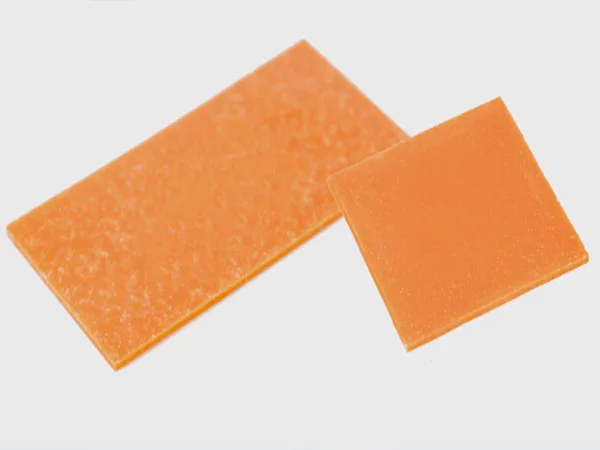
1. The Core Technology: A Smart Extinguishing Agent in a Microcapsule
Perfluorohexanone (C6F12O) is a widely recognized clean, high-efficiency extinguishing agent with zero ODP, low GWP, and no residue, conductivity, or corrosion after discharge. Microencapsulation traps liquid perfluorohexanone inside micron-scale polymer shells, forming a flexible sheet that can be cut and adhered to any surface.
The active suppression mechanism is simple and direct:
Stable in normal conditions: at ambient temperature the capsules stay intact and the agent remains safely sealed.
Heat-triggered response: when local temperature at the patch rises to the shell's designed melting point (customizable, e.g. 68°C or 93°C), the capsule wall ruptures instantly.
Targeted release: the liquid vaporizes rapidly, absorbing large amounts of heat and creating a high-concentration suppression atmosphere right at the ignition point — knocking down incipient fire through combined chemical inhibition and physical cooling.
2. Key Advantages: A Break from Conventional Fire Protection
Truly active, truly targeted: bonded directly to the risk point (battery cell, PCB, terminal block), it shifts protection from the passive detect–alarm–act sequence to self-response at the risk point, extinguishing fire at its earliest stage.
Zero secondary damage: perfluorohexanone leaves no residue after vaporizing — unlike dry powder, which contaminates equipment, or water-based media, which cause short circuits and corrosion. Precision electronics stay protected.
No external power or piping: the patch needs no power supply, installs easily, and costs very little to maintain — ideal for distributed sites where conventional pipe networks are impractical.
Flexible and highly compatible: cut to fit equipment contours and integrate seamlessly into existing structures or tight spaces.
3. Core Applications
Electrochemical energy storage and new energy vehicles:
Use: bonded directly to lithium-ion cell surfaces or into module gaps.
Value: when a cell goes into thermal runaway, the local heat immediately triggers the patch, releasing agent to suppress that cell's venting and block heat spread to neighboring cells — buying critical time for system warning and response and preventing a domino effect.
Power electronics and data centers:
Use: applied to breakers and busbar joints in high-voltage switchgear, and to high-heat components such as server PSUs and GPUs.
Value: prevents arc fires caused by poor contact or overload, shielding costly servers and network gear from fire and from the collateral damage of conventional agents.
Telecom infrastructure:
Use: deployed inside outdoor base station BBU cabinets and AC/DC power modules.
Value: gives unattended remote sites reliable first-response fire protection, avoiding large-scale network outages caused by fire.
Specialty transport and aerospace:
Use: protection of specific risk points in marine and rail electrical cabinets and avionics bays (E-bay).
Value: a lightweight, highly reliable solution for space-constrained, harsh, safety-critical environments.
Home and commercial appliances:
Use: integrated into high-end smart meters, EV chargers, and uninterruptible power supplies (UPS).
Value: raises the ultimate safety level of consumer and commercial electronics, guarding against fire from internal circuit faults.
Perfluorohexanone microcapsule patches represent the shift in fire safety from system-level macro protection toward device-level micro immunity. They are not meant to replace conventional macro suppression systems, but to serve as an essential complement and enhancement — intervening precisely at the earliest, most microscopic scale.
As society grows more dependent on electricity and electronics become ever more densely integrated, this in-place, active, clean protection concept will only gain importance. It is not just a technical innovation but a shift in safety thinking — an indispensable building block for more resilient smart cities and critical infrastructure.
Need machine configuration advice?
Leave your details and an engineer will contact you within 12 hours.