
How to Configure a PU Dispensing Machine: Match the Machine to the Adhesive
Two-component polyurethane has a narrow process window: the isocyanate side is moisture-sensitive, the polyol side settles, and small deviations in ratio or temperature change hardness, adhesion and dielectric performance. This guide walks through pump type, mixing method, temperature control and vacuum degassing, plus two common pitfalls and five questions to answer before you request a quote.
Two-component polyurethane (PU) has a narrow process window. Component A (isocyanate) is moisture-sensitive, while component B (polyol) tends to settle. A slight ratio error or a few degrees of temperature drift will change hardness, bond strength and dielectric performance after curing. Hand mixing makes batch consistency hard to guarantee, and it is odorous and messy to clean. A PU dispensing machine really only has to solve three things: accurate ratio, uniform mixing, stable temperature.
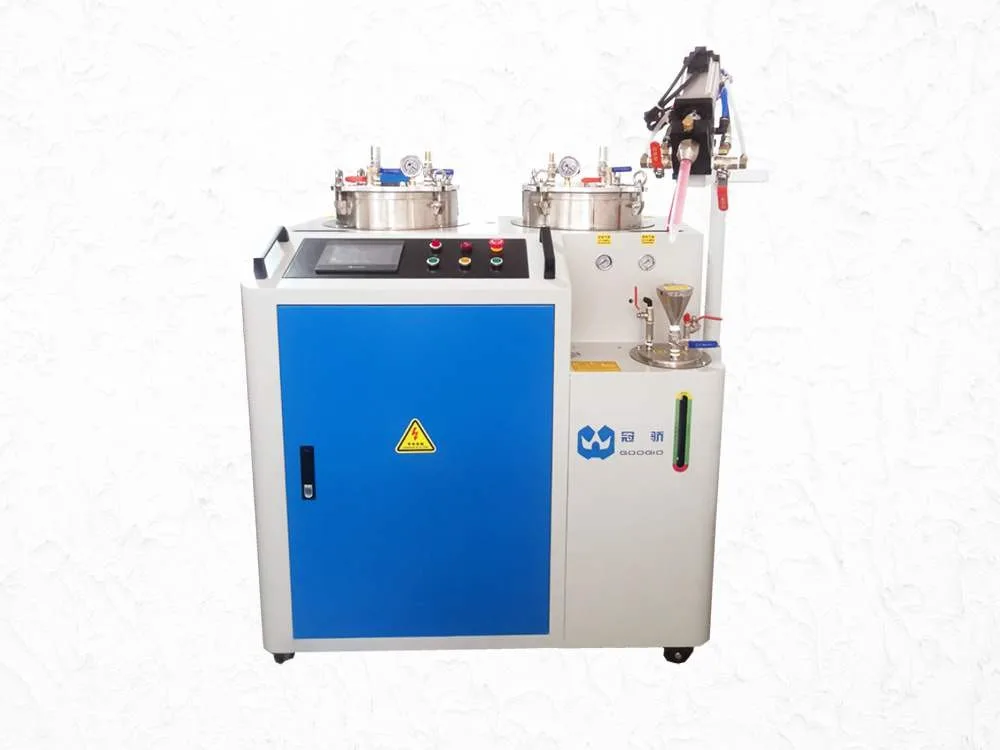
Four configuration decisions that matter
- Metering pump: filler content is the dividing line. For neat PU or lightly filled systems, gear pumps offer high accuracy and long life. For heavily filled systems (alumina, silica powder and similar), specify a wear-resistant screw pump — otherwise a gear pump is worn out within months and the ratio starts to drift.
- Mixing method: driven by viscosity and pot life. Low-viscosity materials with long pot life are fine with a static mixer: low cost, disposable, no cleaning. High-viscosity materials, or systems that gel within a few minutes, require dynamic mixing together with automatic cleaning.
- Temperature control: cooling matters as much as heating. The same PU formulation behaves completely differently in summer and winter. Tanks and lines should both heat and cool (chiller circulation) and hold material temperature within ±2 °C of setpoint. A heat-only configuration is the usual source of trouble in hot, humid seasons.
- Vacuum degassing: decide from the product. Potting high-voltage electrical parts, optical components or thick adhesive layers requires vacuum degassing, otherwise trapped bubbles cannot escape and dielectric withstand tests fail. Simple encapsulation can skip the cost.
Two pitfalls that catch most buyers
- Automatic cleaning is not a gimmick, it is mandatory. PU begins reacting as soon as it is mixed. Static mixers are cheap and disposable, but a dynamic mixing head is expensive: without high-pressure atomised cleaning you must disassemble and wipe it by hand every time — slow, solvent-intensive and unsuitable for continuous production.
- Ratio accuracy is about long-term stability. Many machines look accurate when new; after six months, worn seals and increased pump clearance let the ratio drift. Specify branded core metering components (servo motors plus precision metering pumps) and make sure spare parts are easy to replace.
Five things to confirm before selection
- Which adhesive, from which supplier, and which grade?
- What is the A:B mix ratio (1:1 and 10:1 are very different)?
- Is the material filled, and roughly at what loading?
- How many grams per part, and how many parts per day?
- Is vacuum required, and are there other special process requirements?
Answer these five questions and a supplier can propose an accurate configuration. Ask only for a price and you will rarely receive a usable quotation.
Conclusion
There is no universally best PU dispensing configuration — only one that matches your adhesive, your product and your output. Selection starts with understanding the material and the process, not with comparing prices. Pump type, mixing method, temperature control and vacuum configuration for a two-component dispensing machine should all follow from those answers.
Need machine configuration advice?
Leave your details and an engineer will contact you within 12 hours.