
Vacuum Casting Tips for HV Transformers & Instrument Transformers
Epoxy vacuum casting is central to manufacturing HV transformers and instrument transformers. It fills coil-to-mold gaps evenly and forms a dense insulation structure after curing, ensuring safety and stability under long-term high-voltage operation.
Epoxy vacuum casting is central to manufacturing HV transformers and instrument transformers. It fills coil-to-mold gaps evenly and forms a dense insulation structure after curing, ensuring safety and stability under long-term high-voltage operation. The process spans material handling, mold prep, vacuum control, casting, and curing—each with critical points worth attention.
1. Material Handling & Preparation
Casting materials are not ready to use as-is. Moisture in resin, hardener, or filler vaporizes under vacuum and remains trapped in the cured insulation, creating weak points. Store materials in a dry, ventilated area, seal partially used containers promptly, and preheat resin and filler before use to remove moisture. Filter out mechanical impurities so only clean, uniform material enters the casting system.
2. Preheating Molds & Coils
Cold molds cause resin to cool rapidly on contact, reducing flow and leaving fine gaps unfilled. Residual moisture or solvent in coils volatilizes on contact with hot resin, forming bubbles. Preheat molds and coils in an oven to a suitable temperature and hold long enough for even heat penetration. Install preheated coils into molds and cast immediately to avoid re-absorbing moisture. The goal is to keep mold, coil, and casting material at similar temperatures.
3. Establishing the Vacuum
Vacuum is what separates this process from atmospheric casting. Under high vacuum, dissolved gases and entrained air are drawn out, and resin penetrates fine gaps between coil turns and layers. Monitor vacuum rise rate and ultimate level; poor sealing or pump performance prevents effective degassing. Watch the material level to avoid over-volatilizing low-molecular components that would alter the mix ratio. Hold vacuum for a sufficient period before casting.
4. Casting Essentials
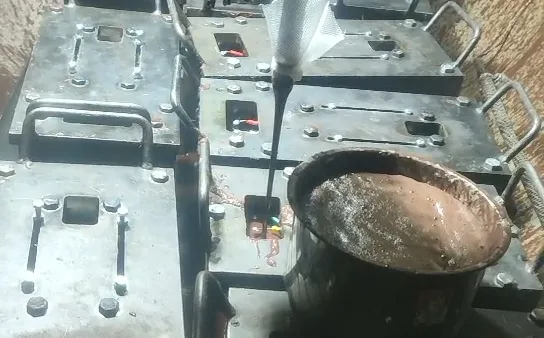
Pour mixed resin slowly along the mold wall so the liquid level rises steadily and air is expelled layer by layer. Too fast creates turbulence and entrains air; too slow risks premature gelling. Some processes backfill the chamber with insulating protective gas after vacuum, helping fill complex dead zones and improving cured insulation. A short secondary vacuum after casting provides final degassing.
5. Curing & Post-Cure Care
Curing is not simply waiting. Resin shrinks chemically and releases heat; excessive temperature or rapid heating causes shrinkage stress and microcracks that grow under high voltage and lead to breakdown. Use staged heating: gel at lower temperature, then ramp up to final cure. Hold long enough for full reaction and target mechanical/electrical properties. Cool slowly to room temperature before demolding to avoid new thermal stress.
6. Common Defects & Prevention
Typical issues: trapped bubbles, surface cracks, and excessive partial discharge. Bubbles stem from moisture, insufficient vacuum, or wrong casting speed; cracks from poor curing profile or rapid cooling; partial discharge from micro-defects or impurities. Prevention beats repair: inspect incoming materials, maintain the vacuum system, follow casting and curing parameters strictly, and keep batch records for traceability.
7. Basic Workshop Requirements
Keep humidity low—airborne moisture is absorbed by materials. Low temperature raises resin viscosity and hurts flow. Keep the casting area clean to reduce dust that becomes insulation impurities. Equip the workshop with temperature/humidity control and clean regularly. Operators should wear anti-static clothing and protective gear for safety and product cleanliness.
Every step in epoxy vacuum casting is interconnected; any oversight can compromise insulation performance and service life. For HV transformers and instrument transformers demanding extreme electrical reliability, process discipline requires sustained attention. Consistent, careful operation, observation, and record-keeping ensure long-term product quality.
Need machine configuration advice?
Leave your details and an engineer will contact you within 12 hours.